
The Use of the Sanctus Bell in Roman Liturgy

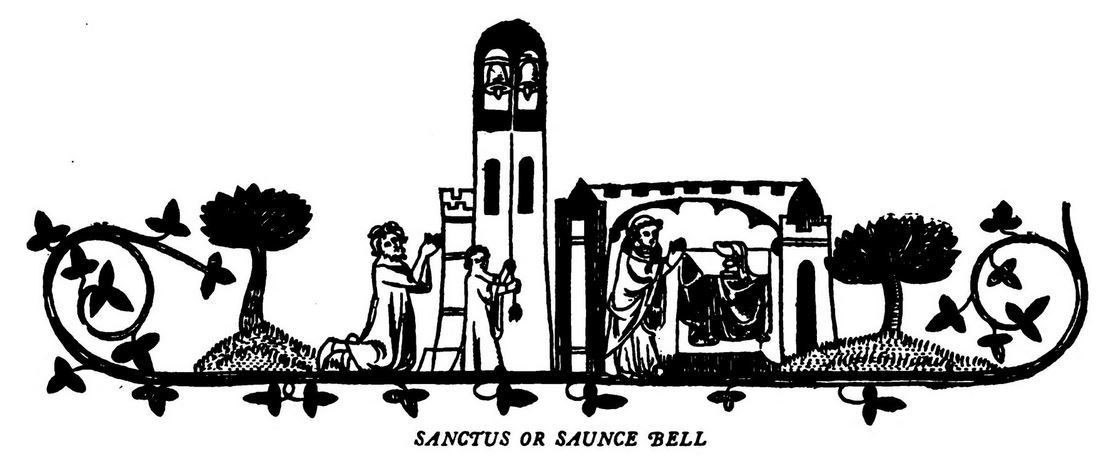
An altar bell. Source: Wikimedia Commons. PD Image.
PD Image

We now turn to another of the compelling theories for the existence of low side windows which had significant support from antiquarians in the 19th century. A quote from the autumn 2019 edition of the online magazine of the Archdiocese of New York perfectly describes the ritual of ringing a Sanctus (or sacring) bell which has taken place for hundreds of years:1
“Although it is not a required practice, an altar server often rings a small bell or bells during the consecration to draw attention to the precise moment when transubstantiation – the conversion of the bread and wine into the body and blood of Christ – takes place.
“The custom originated during the 11th through the 13th centuries, when theologians were attempting to define more precisely the way in which Christ is present in the Eucharist. As Catholics continued to meditate on this profound mystery, various liturgical practices were introduced in order to signal His presence on the altar under the appearance of bread and wine.“For example, in the 12th century, priests began the practice of elevating the host following the consecration. In France and England, a dark curtain was sometimes drawn to create a background against which the Eucharistic host could be seen more clearly. At early morning Masses, when it was still dark, a candle was often lit to illuminate the Eucharist at its elevation. Altar servers were even warned not to use too much incense at this part of the Mass so that the faithful’s view of the Eucharist wouldn't be obstructed. In some places, in addition to the ringing of an altar bell after the consecration, the large bells of parish churches were also rung so that those throughout the town or in the fields could pause from their work to kneel and pay honour to the Eucharistic Lord.”
“That prior to the introduction of sanctus bell-cots, and commonly where these were not erected, then at the low side window—the only real opening in the church except the doors, and this unglazed, but provided with a shutter—the sacristan stood, and at the elevation of the Host opened the shutter and rang the sanctus bell, as directed, I think, in the ancient liturgy [quoting Archbishop Peckham] than by a bell-cot, which was probably an innovation, though an elegant one. There is no example of the latter earlier perhaps than transition Norman, whereas of the former there is one of the Saxon period, it seems, at Caistor; and the cot was not as general as the window, which continued in use down to plain Perpendicular.”
In his book, Church Treasures in the Oxford District,3 Ford suggests that openings high above the floor in a number of Saxon or transitional churches’ western towers which faced the altar might have been used by the sacristan to witness the Elevation of the Host and ring the large bell in the tower. He cites the example of St Matthew’s, Langford, Oxfordshire, famous for its exceptional 11th century crossing tower, which has large openings high in both its east and west faces which would have been suitable for such a purpose.
The chief objection to the generality of the theory is that small bells rung through a small opening (a low side window) would not have been heard at any distance from the church, especially if there was a breeze taking the sound in the opposite direction to the intended audience. The ringing of larger bells to alert people who were further afield would make sense, but large western towers with bells fit for that purpose were not much in evidence until the 15th or 16th centuries. Houghton 4 suggested that the LSW would be placed on the side of the church which faced towards the majority of houses in a village in order for a bell to be more easily heard by the parishioners in their homes. However, even a cursory review of the disposition of a village in relation to the churches of Warwickshire which Houghton surveyed proves that this is by no means universal, and there is poor correlation to advance that particular argument, especially when reference is made to pre-twentieth century maps. Furthermore, in order to alert those in widely distributed fields, a more or less omnidirectional sound would have been required. It is possible that a small bell would alert those already gathered close to the church, possibly for those unable to enter, or barred (for whatever reason) from entering the church, allowing them to participate in the service. Bond 5 suggests that:“On holidays of obligation, of which there were plenty, on which parishioners were bound to attend the parish mass, there might not be room inside the church, and a certain number might be forced to follow the service as best they could from outside”.
Father Thomas E Bridgett in his History of the Eucharist in Great Britain eloquently explains the use of bells in the pre-reformation Mass:6
“The act of the priest was to be followed by corresponding ones in the laity. "Let laymen be admonished," wrote the Bishop of Durham in 1220, "to behave reverently during the consecration of the Eucharist, kneeling down, especially when the sacred Host is lowered after the elevation." The provincial council of Oxford in 1222 decreed: "Let the laity be frequently reminded, that whenever they see the Body of the Lord carried out, they immediately kneel down as to their Creator and Redeemer, and with hands joined humbly pray, until He has gone past. And let them do this especially at the elevation of the Host, when the bread is transformed into the Body of Christ, and that which is in the chalice into His Blood, by the mystic blessing. A similar decree was issued by Bishop Grosseteste of Lincoln in 1236, and by many other bishops. To call the attention of the people at this solemn moment of the Mass, a small bell was rung inside the church, and a larger one outside called the Sacring Bell, otherwise the Sancte, Saints, or Saunce Bell, for at a later period it was rung also at the Sanctus before the Canon of the Mass. Bishop Peter Quivil of Exeter, in 1287, says: " The Host should be raised so high as to be seen by the faithful bystanders; thus their devotion is increased and the merit of their faith. The parishioners should be exhorted that, at the elevation of CHRIST, they do not bend irreverently, but kneel and adore their Creator with all devotion and reverence. To this they shall be excited beforehand by the ringing of a little bell, and at the elevation the great bell should be struck thrice." The larger bell here mentioned hung outside, generally under a little turret on the gable at the east end of the nave. It was placed outside the church that not merely those present around the altar, but even people at a distance, might be invited to assist in spirit at the great Mystery. The provincial council of Lambeth, 1 28 1 , says : " At the elevation of the Body of the Lord a bell must be struck on one side, that the people who are unable to be present daily at the celebration of Mass, wherever they may be, in the fields or at home, may kneel and gain the indulgences granted by many bishops."
Fr. Herbert Thurston in his notes to Father Bridgett's work refers to the "obscure" subject of Eucharistic reservation.7 Thurston quotes the "great canonist" Bishop Lyndwood. Lyndwood, who, in commenting on Archbishop Peckham's constitution of 1281 (see page 3) stated that in every parish church there must be a decent tabernacle with a lock for the security of the sacrements. He goes on to quote Bishop Quivil of Exeter whose synodal decree of 1287, writing a mere six years after Peckham's constitution, listed the requisites which aught to be provided in every church. This included a, "sacramentarium lapideum et immobile"; literally an immovable stone receptacle for the sacrements. Fr. Thurston then, in rather a grand leap of faith states:
This rather fanciful idea could rightly be regarded as the twentieth theory (albeit only applicable to "diminutive orifices), adding to the nineteen already enumerated above. In an exchange of correspondence on the ongoing debate for the reason low side windows exist published in The Times in autumn of 1938, Fr. Thurston seems to row back on his earlier assertion. In reply to a letter from the Rev. J A Carter of St Mary's, Lillington, Warwickshire, who had misattributed Hurston's words to Fr. Bridgett, Fr. Thurston states;
It is worth exploring Sanctus bell cotes in more detail, if only to provide further evidence that low side windows were not used for the ringing of bells. Hereafter the term "Sanctus bell cote" is used to describe an external stone or wooden framework for the hanging of a bell on a roof (e.g. the apex of a gable wall) or to the side of a wall. As previously mentioned when discussing the various theories for the existence of low side windows (p3), it is likely that many more churches than we might suppose were equipped with Sanctus bell cotes on the east gable of the nave at an early date, and some are likely contemporaneous with the building of the church, their ropes passing into the chancel where the priest's assistant could ring a large, external bell at the appropriate moment. A good number of bell cotes on the east gable of naves are still in situ, though dating them exactly is problematic. However, there are plenty of extant examples which one can, with reasonable confidence, date to between the 12th and 14th centuries. Many, of course, will have fallen out of use with the coming of the Reformation, and many will have fallen victim to gravity (with little reason to reinstate), or to later restorations. There are also many examples of churches with 12th-14th century bell-cotes at the west end of the nave which could have served the same purpose as those at the east end. Examples include Little Casterton (c13), Essendine (also c13), both in Rutland, with Essendine, also having a particulalry nice low side window (see page 9). In Gloucestershire Shipton Oliffe has a splendid double cote of the c13.

St Mary Magdalene, Wardington, Oxfordshire. A rare example of an extant 14th century bell cote on the east gable of the nave. The oculus below was likely to allow the bell rope to pass through the wall.
"These openings were for the ringing of the sanctus bell at the solemn periods of the Mass by the altar clerk, before sanctus bell-cotes on the nave gable came into use. The shutter that closed the unglazed aperture would be opened in order that the sound of the handbell rung thereat might warn outsiders of the Holy Mysteries." 10
Cox here seems to be attempting to justify his assertion (and in concurrence with Bond) that low side windows were used to ring a bell so that people outside would hear it by citing the use of a sacring bell rung out of a window of someone's house where an ad-hoc altar had been set up in extremis by Roman Catholics who were valiantly defying the rapid changes which were taking place in liturgical practices in the fledgling Church of England during the early days of the Reformation. He confidently, and without further evidence, states that "sacring windows" [low side windows] were succeeded by the sanctus bell-cote. This confidence may be misplaced, however, as it is extremely difficult to precisely date either a low side window, or a bell cote. Furthermore, and as was already aired in the earlier chapter summarising the theories for the existence of low side windows, both Bond and Cox failed to address a simple question; Why go to such extraordinary trouble to install a new opening low down in the chancel wall (and in some cases a highly elaborate opening) simply to ring a bell whose reach would be minimal, when a large bell, audible for a considerable distance as required by Archbishop Peckam's Constitution, could have easily been hung off a rudimentary wooden or steel bracket high on an external wall, a surviving examples of which can be found at Wardington (Oxon - see above) and Studley, Warwickshire, the latter being extremely rudimentary? It has to be acknowledged that any aspect of church architecture is not limited to functionality; it is also about beautification, so a simple solution quickly implemented to address a particular liturgical practice, or episcopal decree, may have later been replaced with a more permanent structure - that is, one fit for a building built to the Glory of God - and there are plenty of surviving examples of elegant bell-cotes built for both functionality and beauty.
As Fr. Thurston explained, the liturgy behind the elevation of the Host was developed and introduced gradually over a considerable number of years and seems to have been a constant subject of debate amongst eminent churchmen in western Europe during the 12th and 13th centuries. That church architecture evolved in lock-step with the developing liturgical practices cannot be denied.
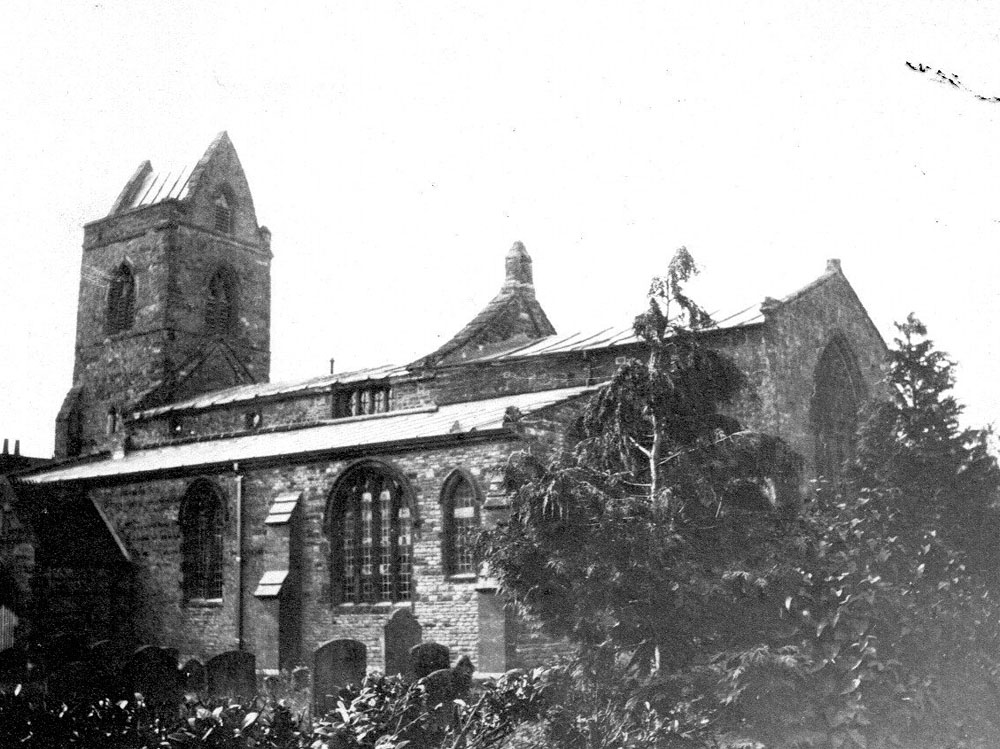
St Peter & St Paul, Rothersthorpe, Northamptonshire, circa 1913 just prior to the restoration of the church and removal of the c14 bell-cote.
PD Image.
PD Image from a postcard in the author's collection.
With the exception of Fathers Bridgett and Thurston, the possibility that Sanctus bell-cotes on the east gable of the nave were a common feature of pre-reformation churches seems to have been almost completely ignored - or simply not considered - by previous writers on the matter of low side windows. Cox and Bond are somewhat dismissive. However, there is good evidence to suggest that Sanctus bell-cotes were far more numerous than has heretofore been acknowledged, as many would have been swept away at the hands of Victorian, and later "restorers", as well as those which may have disappeared as the "Popish" practice of ringing a Sanctus bell at the Elevation of the Host fell out of fashion post-reformation. Some may have simply fallen down or been in such danger of doing so (and being redundant in any case) were removed. The lowering of the pitch of nave roofs as evidenced by surviving steeply pitched residual weather-molding still attached to the west side of towers in many pre-reformation churches, attests to many an east nave gable wall which has been modified or obliterated, likely resulting in the loss of the redundant bell-cote. A good example of 20th century restorations which saw the loss of the medieval bell-cote on the east gable of the nave is provided at St Peter and St Paul, Rothersthorpe, Northamptonshire (pictured above left). Prior to the church's restoration in 1912/14,13 there was a bell-cote on the apex of the east gable of the nave, probably c14, as can be seen in the photograph of around the early 20th century. This was removed when the nave east gable was lowered to allow for a contiguous roof along the length of the nave and chancel (the nave roof pitch had been lowered previously, but this earlier work had left the original east gable and bell-cote in situ - the old nave roof line still being visible on the west wall of the tower). All Saints church, Lilbourne, Northamptonshire presents another example of a Sanctus bell-cote on the east gable of the nave which was lost during a late 20th century restoration. Lilbourne also has a c14 low side window on the north side of the chancel.
There are many surviving examples of pre-reformation Sanctus bell-cotes on the east gable of a church's nave, some with functional bells, which also have low side windows. To mention just a few in north Oxfordshire, this duality can be seen at Wardington (see above), Binsey, Swalcliffe, Epwell, Bloxham, Somerton, Brize Norton, and Tadmarton. These examples seem to completely shred the theory that low side windows' main function was for the ringing of a Sanctus bell at the elevation of the Host.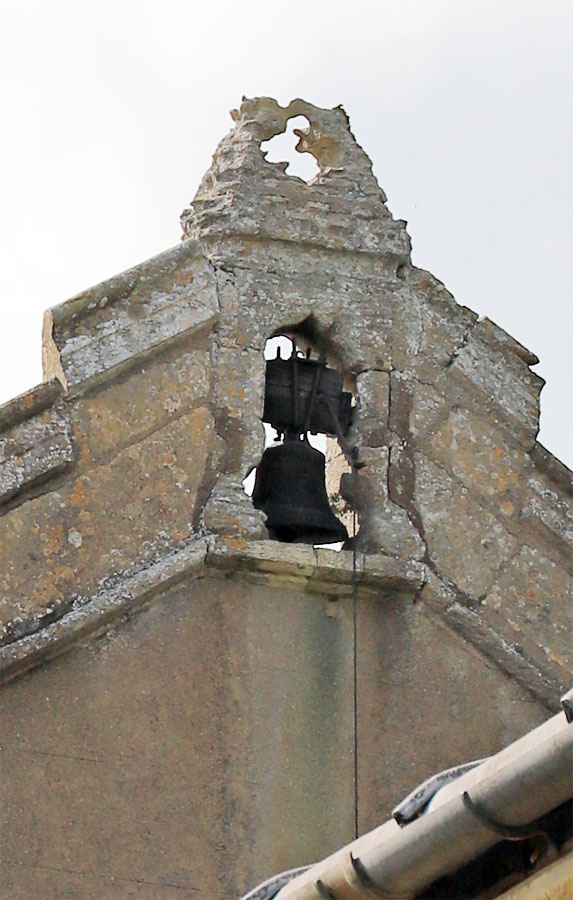
An excellent example of this conundrum can be found at St Mary's, Over, Cambridgeshire. Here there is a bell cote on the east of the nave (pictured right), the rope for which passes through the roof via a pulley and lever system to the north west corner of the chancel. The cote still contains a bell, which appears to be functional to this day. The nave clerestory was added in the c15, along with the aisles, but the bell cote stonework looks considerably older, so may have been part of the much earlier c12 nave, and retained as part of that rebuilding. If so, then St Mary's has had a Sanctus bell from the outset. What is also of interest in this church is the opening high in the east wall of the tower, and just below an earlier nave roof line which is still visible externally - illustrated in the slide pack for this section. The old roof line shows the pitch of the roof which covered the narrow nave prior to its widening and addition of the clerestory. The tower itself was built in the early c14.14 Anyone standing at that opening would have had a view of the high altar, ready to ring a bell in the tower at any given signal, including the raising of the Host. In addition, there are two low side windows (now blocked) on the north west and south west corners of the chancel.
St Mary's church at Over, Cambridgeshire therefore presents a significant problem for the Sanctus bell theory. If there was a c12 Sanctus bell on the east end of the nave gable which could be operated by a sacristan standing in the chancel, and witness to the elevation of the Host, and at a later date in the early c14, a bell tower with a high opening from which someone could see the altar and ring a bell from that vantage point, thereby giving ample provision for ringing a bell which would have been widely heard around, and at some distance from the church, why would there be a need for two low side openings supposedly there for ringing of a Sanctus bell?
A similar arrangement of bell cote on the east of the nave, and an opening high in the east wall of the tower with a view of the high altar, can be seen at St Peter & St Paul, Swalcliffe, Oxfordshire, but here, unlike Over, Cambridgeshire, the opening is still internal to the nave. The Sanctus bell and rope running to the north west corner of the chancel are still in situ. At St Andrew's, Lyddington, Rutland, the tower and chancel were built in the first half of the c14.15 Internally, on the east wall of the tower, the original nave roof line which predates the clerestory is still visible. Below this roof line is a large opening, (now blocked up) which, like those at Over, and Swalcliffe would have commanded a view of the high altar. Lyddington also has a low side window at the south west corner of the chancel.
Churches with western or crossing towers which predate the low side window.
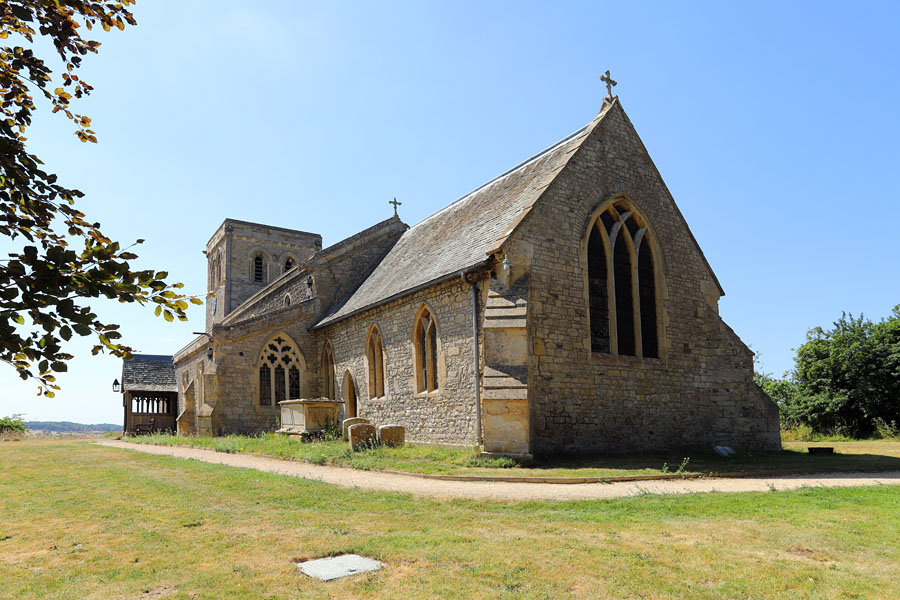


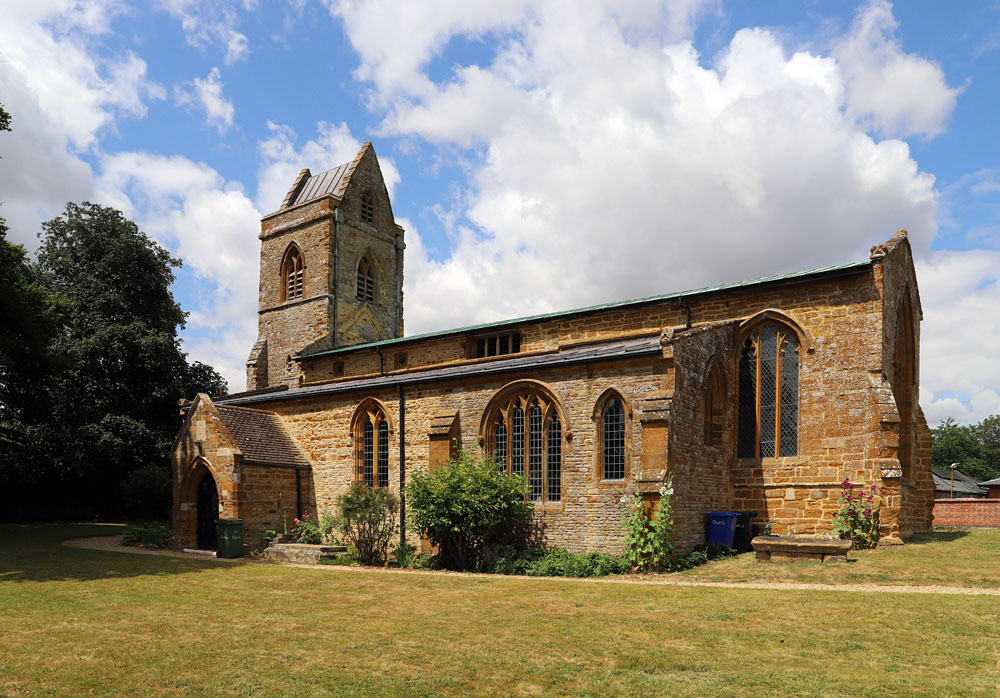
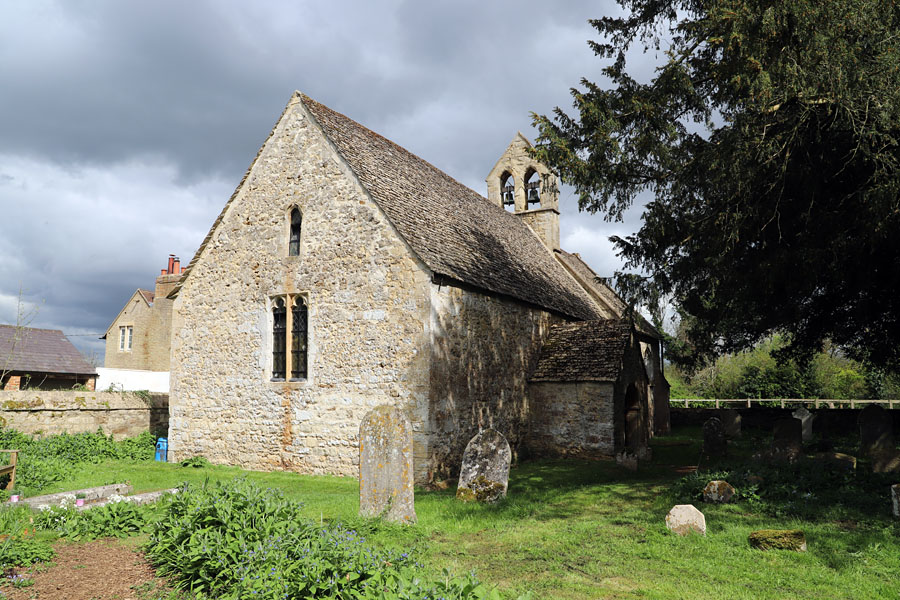
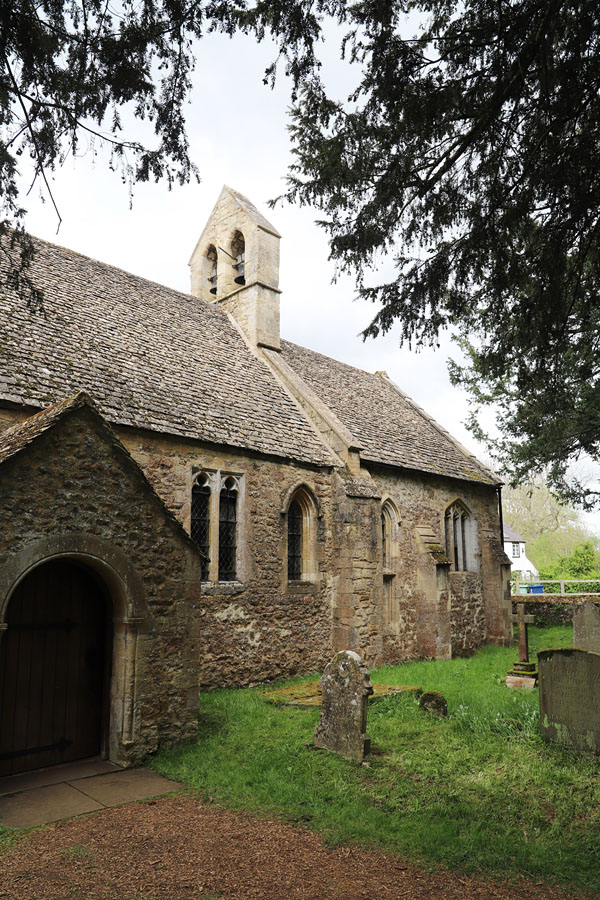
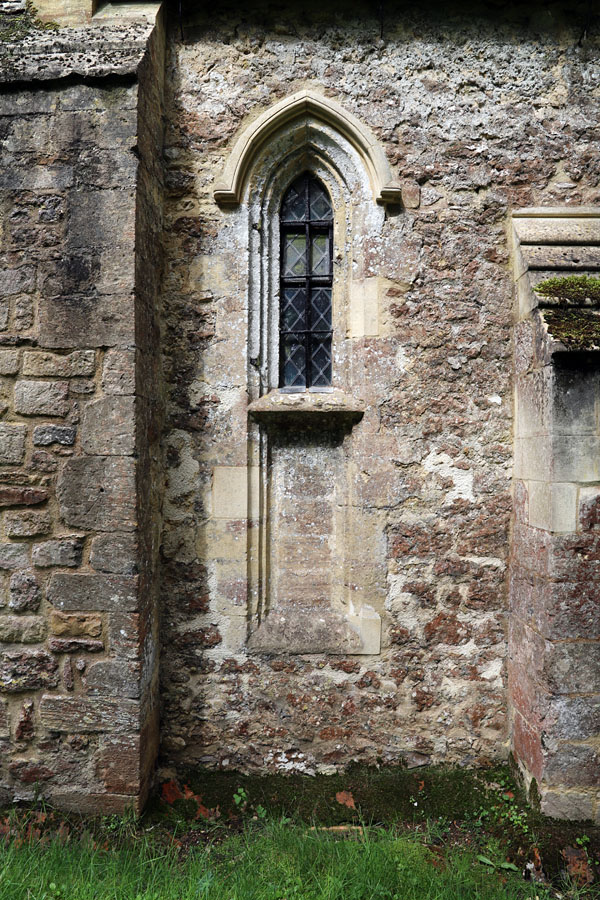
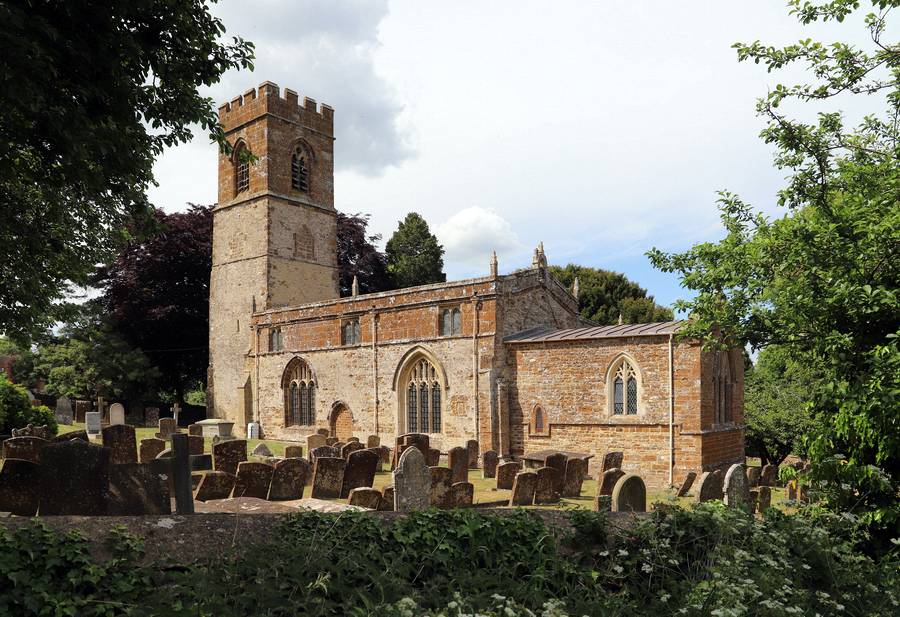
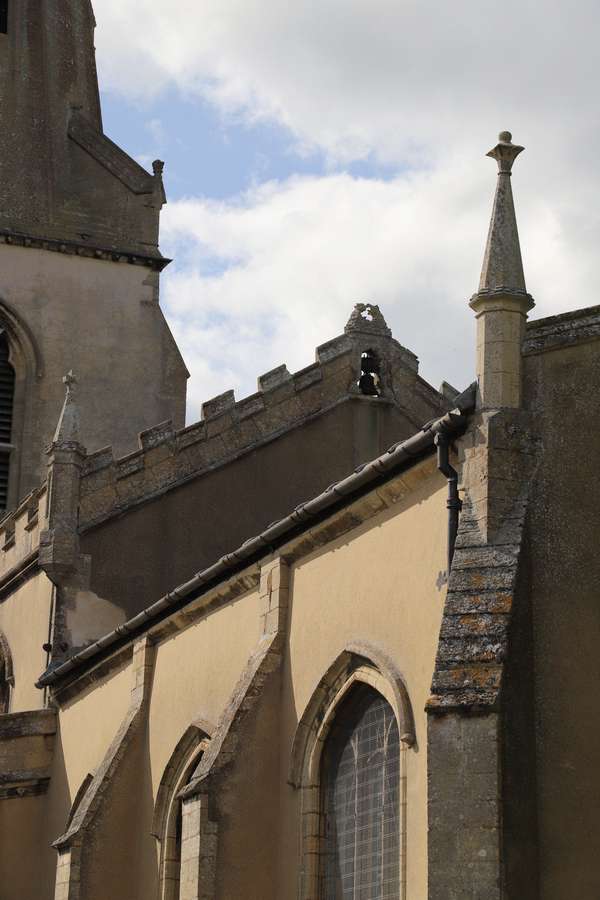
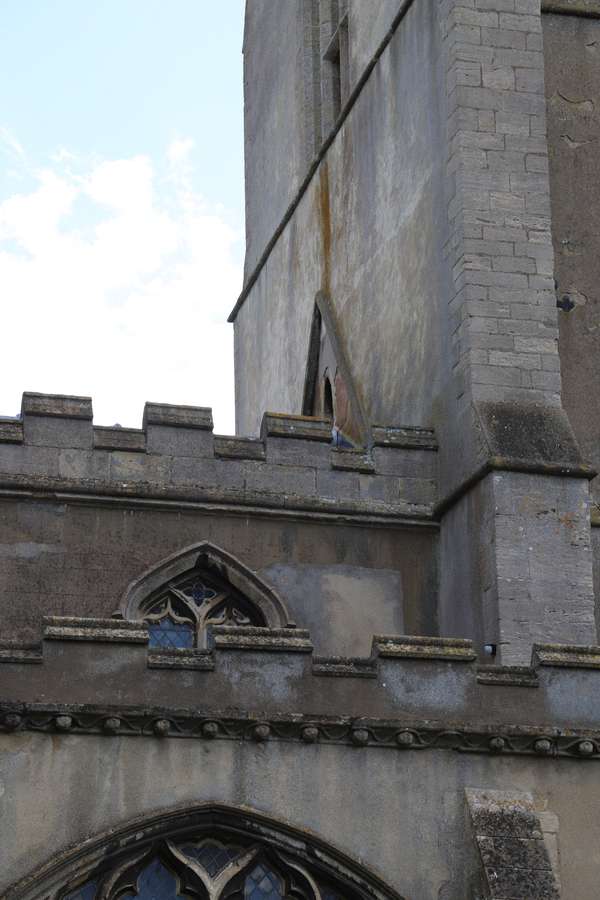
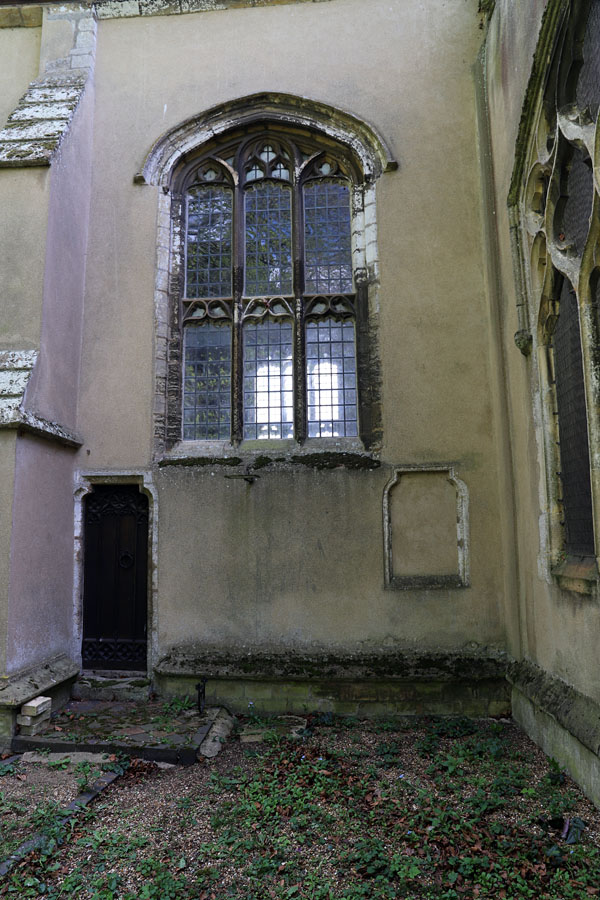
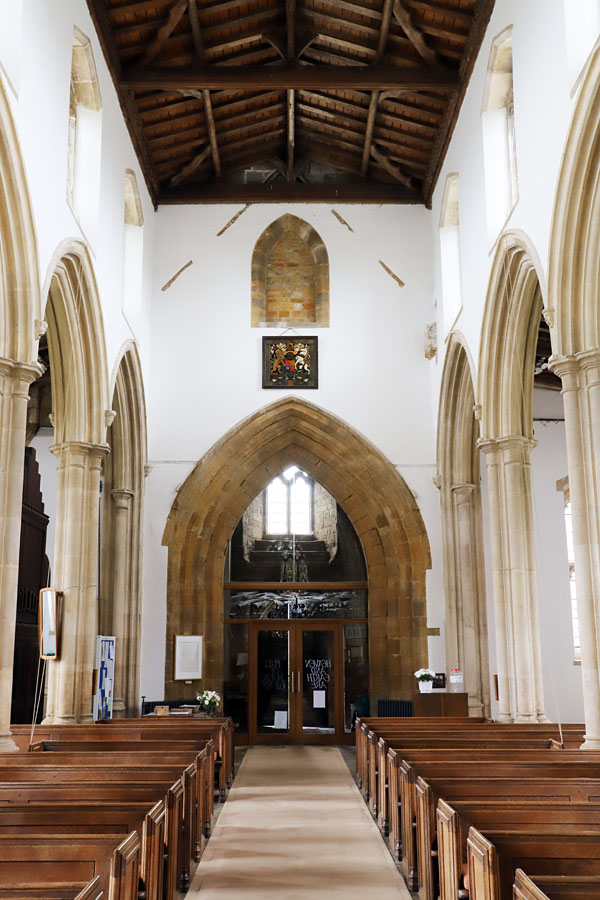
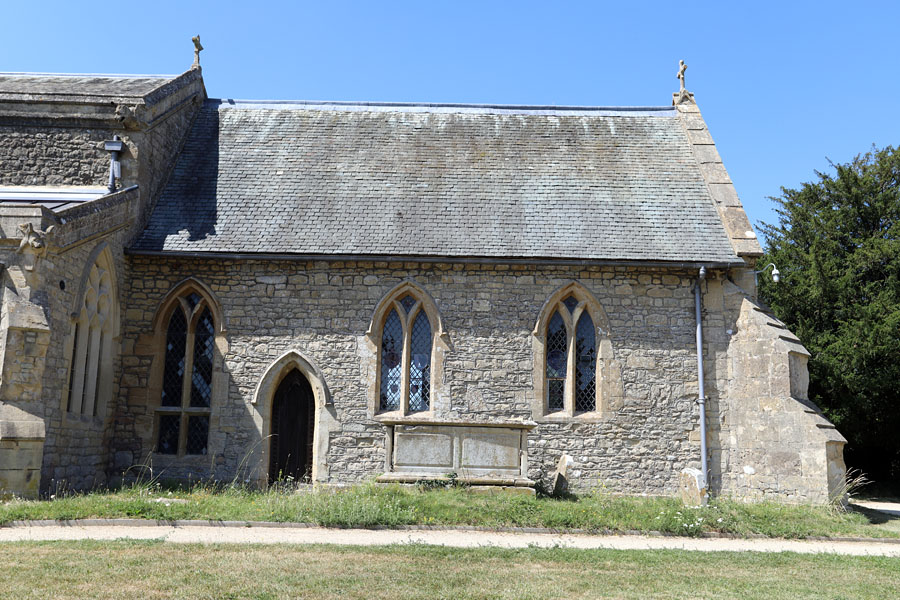
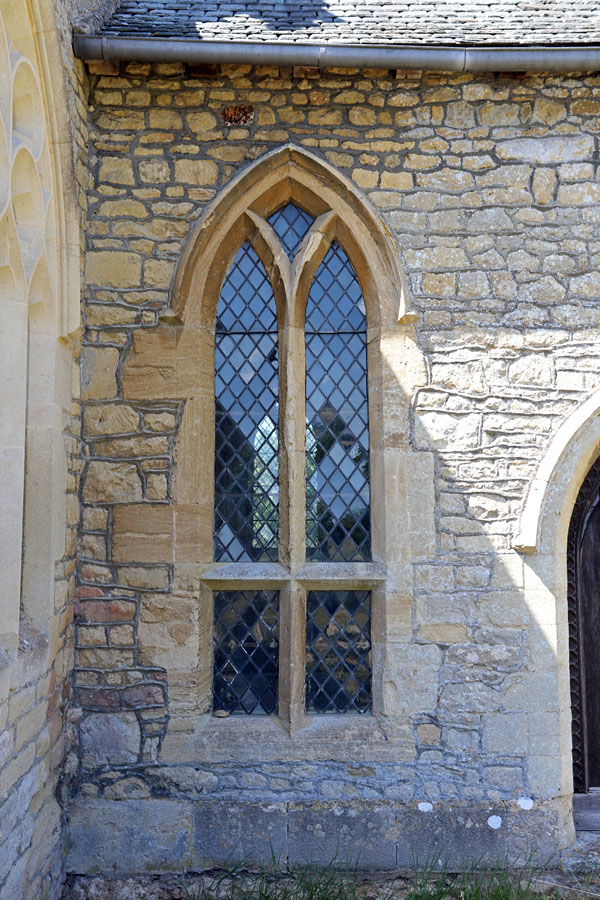
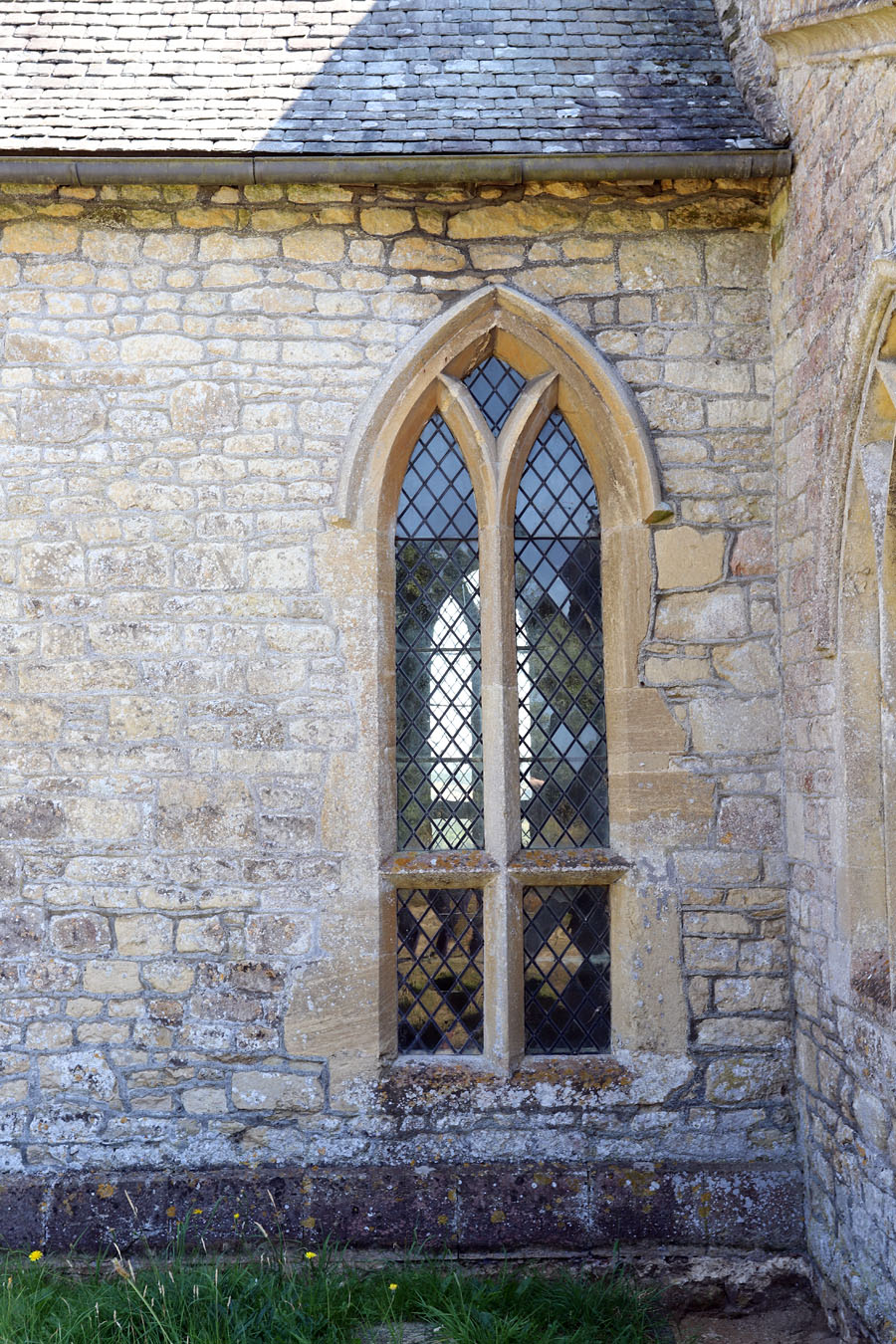
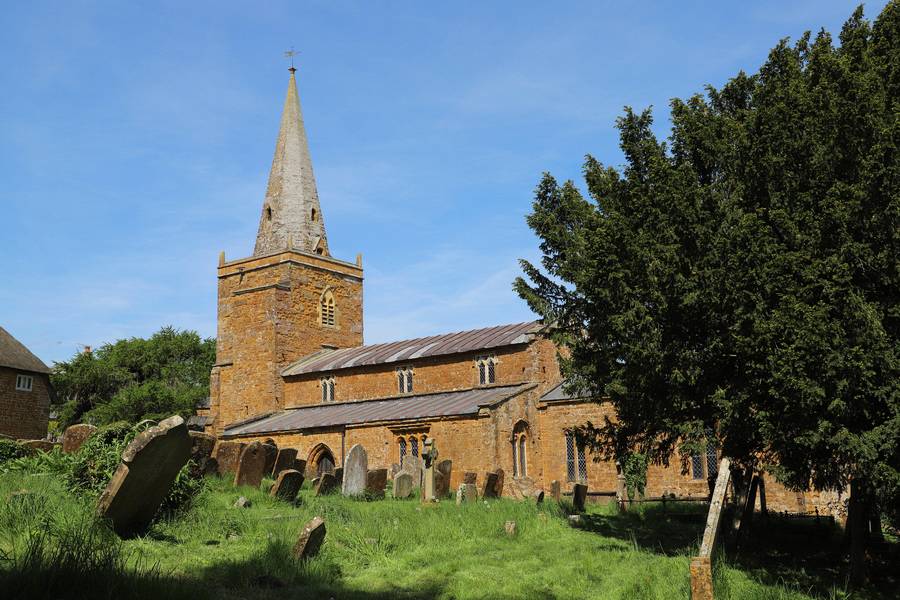
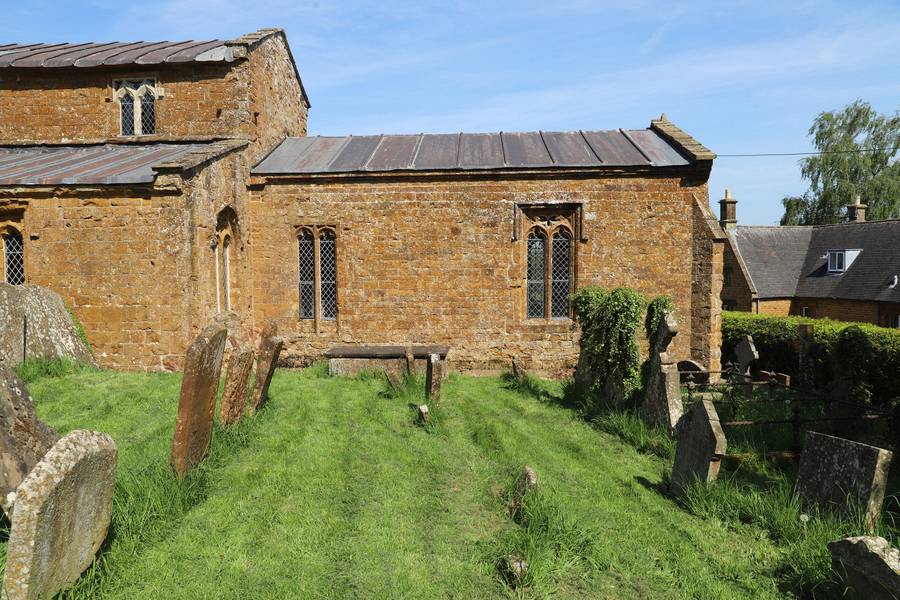
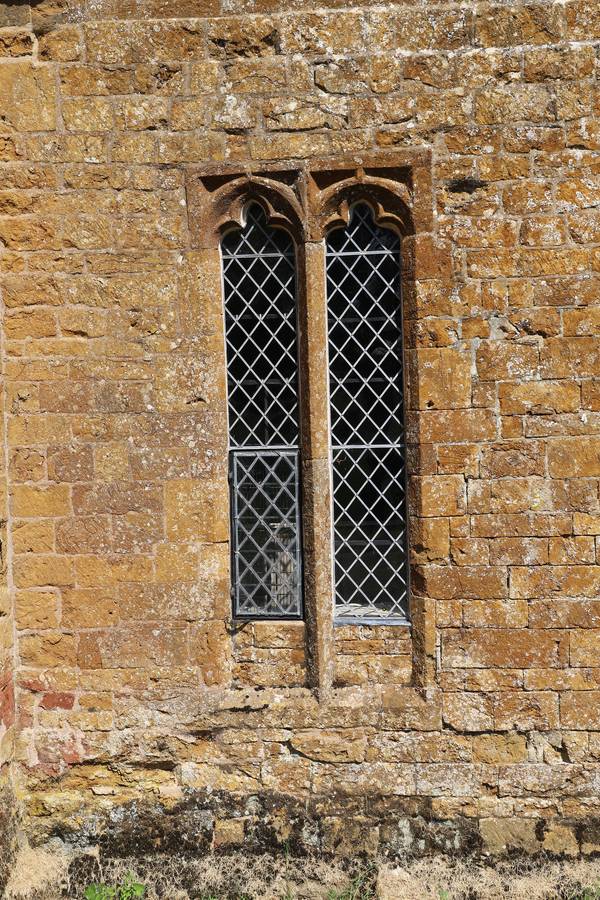
Already mentioned are bell cotes on the western gable of a nave which predate low side windoes. But another question which seemed not to have troubled advocates of the Sanctus bell theory, and another aspect which mitigates against it is worthy of exploration; i.e. churches which have western or crossing towers which predate their respective low side windows. In these cases the tower would have served admirably for the tolling of a bell audible at some distance, so a small window in the chancel would have been entirely unnecessary for that purpose. A fine example of this can be seen at St Mary's, Garsington, Oxfordshire (pictured right). The tower at St Mary's is Transitional, built in the 12th century, while the chancel is c13.16 The chancel has three 2-light EE windows with Y-tracery on each side, and both the western windows have been extended downwards by the addition of a transom to form a low side window (see slide pack above for images). The Rev H. Bedford-Pim quoting I. H. Parker, reported; "Parker states that rebates and hinges were to be seen at Garsington in 1844; they are now restored away." 17
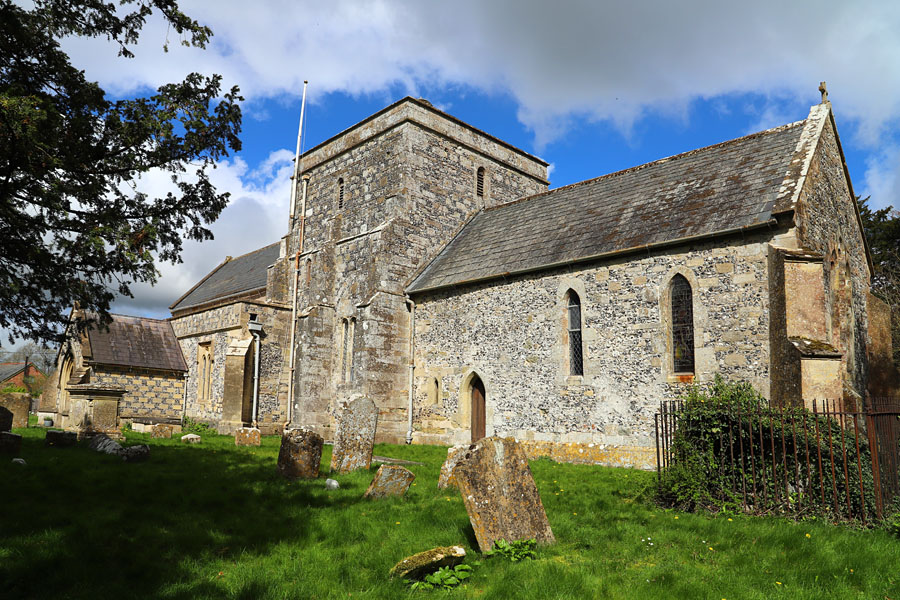
Other examples of c12 western towers with later low side windows can be found at Goodmanham, and Kirby Grindalythe, North Yorkshire, Boothby Pagnell, Lincolnshire, Tilton-on-the-Hill, Leicestershire, and Ansley, Warwickshire. Examples of c13 towers with later low side windows can be seen at Shotteswell, Warwickshire, Durnford, Wiltshire, and Blaby, Leicestershire. The church of St Thomas a Becket, Tilshead, Wiltshire is a splendid example of a church with a crossing tower which predates, its low side windows. The squat, bulky tower is c12, and the small, lancet low side windows to north-west and south-west corners of the chancel, both with deep internal splays, more likely a later addition (the chancel was rebuilt in the mid c13).18 Internally the south low window retains its wooden shutter, hinges and latch. Crossing towers of this date further undermine the theory that low side windows were installed for the ringing of a Sanctus bell. Being butted directly with the chancel, central towers give an assistant tasked with ringing a bell in the tower at the appropriate moment a clear view of proceedings at the high altar.
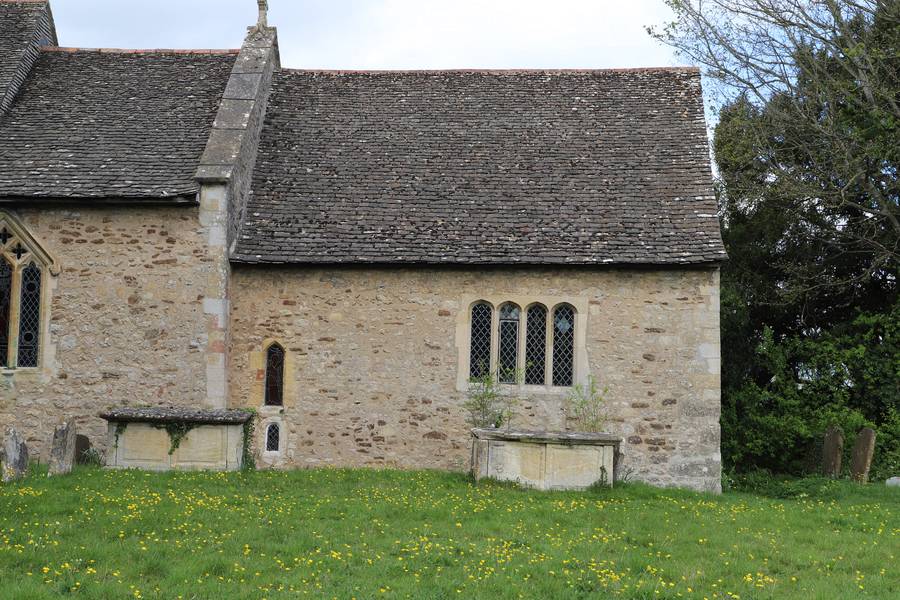
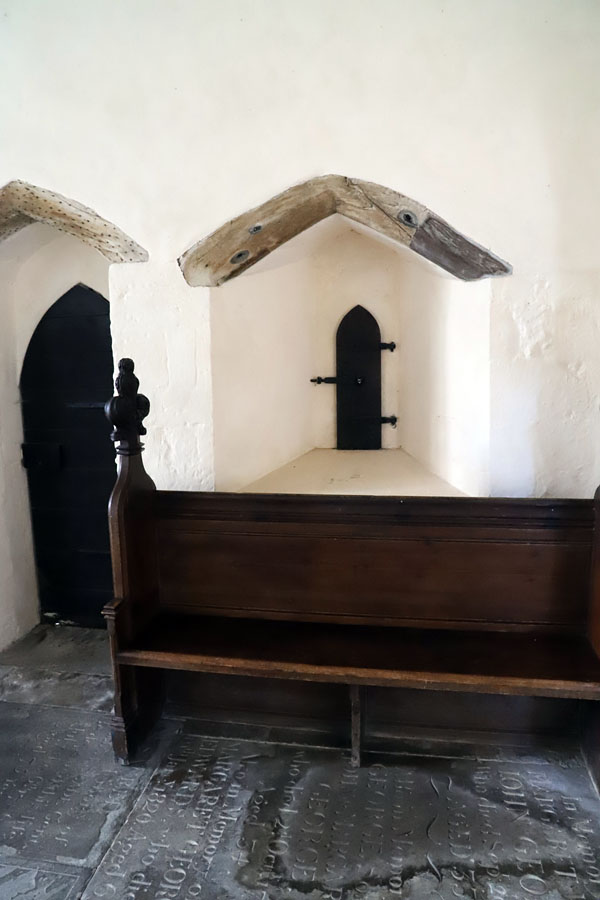
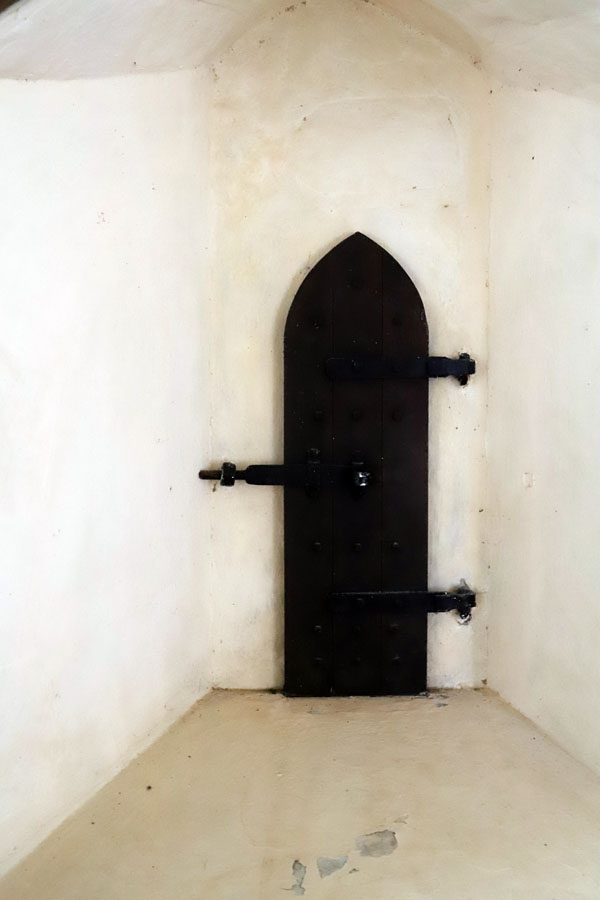
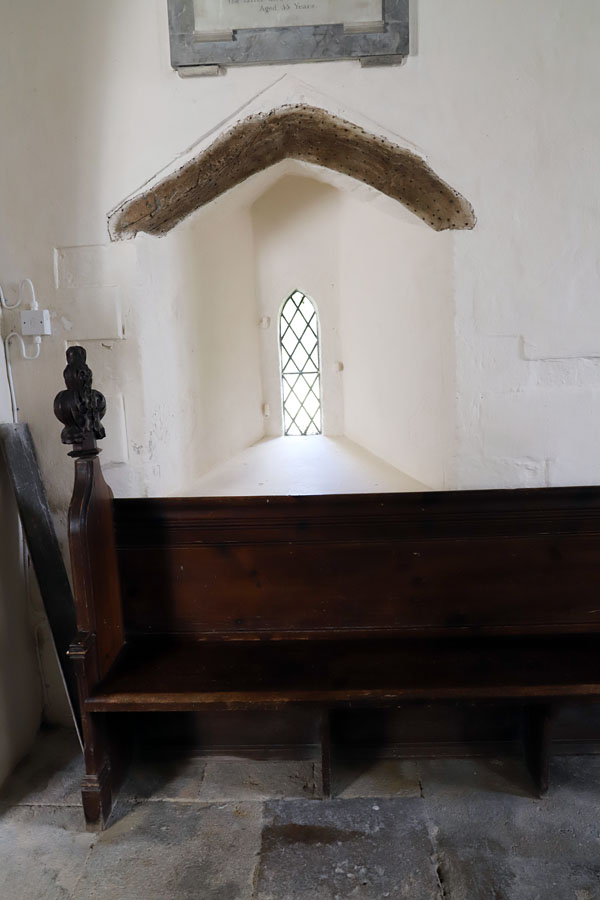
It should be noted here that large bells in cotes or towers would unlikely have been for the sole purpose of alerting souls in the wider vicinity of a sacred act taking place at the altar. They would also have been used (as they are today) to summon the congregation to prayer, as alarms for alerting people of imminent danger, or possibly at times of celebration.
The objections raised above, and the new theory which is advanced later in this essay weighs heavily against the use of low side windows for the ringing of a bell audible at any dustance from the church, and especially one which would be heard by the common people, "wherever they may be, whether in the fields or in their homes".
References & Footnotes: Use your browser's Back button to return to text.
- https://archwaysmag.org/when-and-why-do-the-altar-servers-ring-a-bell-at-mass.
- Cole, J. G. Journ. Arch. Inst. March 1848.
- Ford, E. B. Church Treasures in the Oxford District, 1984, pp71-72
- Houghton, F. T. S. The Low Side Windows of Warwickshire Churches 1906.
- Bond, Francis. An Introduction to English Architecture, 1918, p687.
- Bridgett, T. E. CSSR. A History of the Holy Eucharist in Great Britain. 1881.
- Ibid. With notes by Herbert Thurston, 1908. pp186-187.
- The Times: Letters to the Editor: 19 October 1938, p8.
- Bond, Francis. An Introduction to English Chruch Architecture from the Eleventh to the Sixteenth Century Vol 2. 1913. p692.
- Cox, J. C. The English parish church : an account of the chief building types & of their materials during nine centuries. 1914, p307.
- Thurston, H. The Elevation. The Tablet, 19 Oct., 28 Oct., 2 Nov., 1907.
- Thurston, H. The Elevation. The Tablet, 2 Nov. 1907. p684.
- Historic England; Official List Entry for St Peter & St Paul, Rothersthorpe.
- See British History Online. Over Church. A History of the County of Cambridge and the Isle of Ely, Vol9. pp351-353.
- British History Online. Liddington Church. A History of the County of Rutland: Volume 2. pp188-195. Originally published by Victoria County History, London, 1935.
- Historic England Official List Entry.
- Bedford-Pim, Rev H. Arch Journ Vol 65 1905; "Some Notes on the Origin and Uses of Low Side Windows in Ancient Churches", (pp 20-36). A "thorough restoration" was carried out by Joseph Clarke in 1849 - Ref Historic England.
- Historic England Official List Entry.